California Child Custody: 5 Proven Strategies to Win Your Case
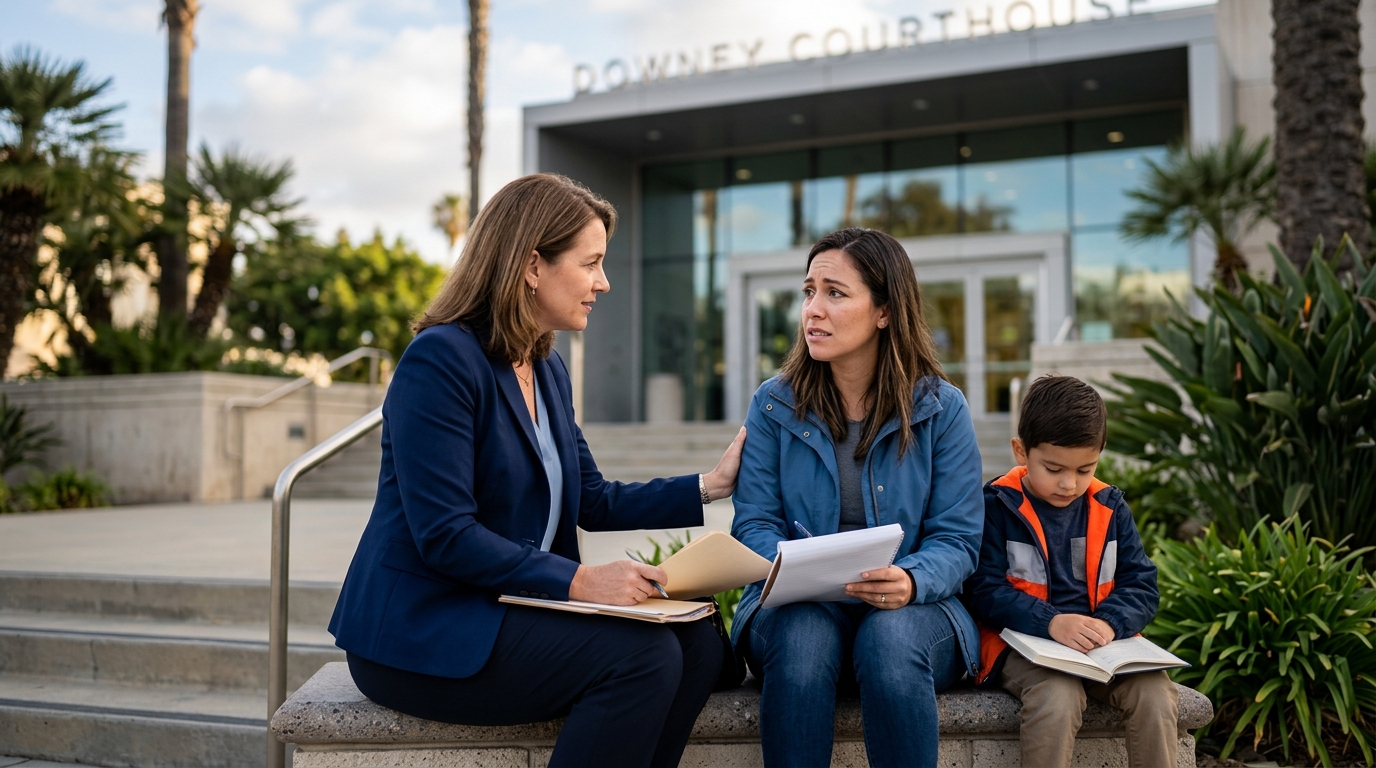
Standing on the steps of the Downey courthouse can feel terrifying. The raw, heart-pounding anxiety of a california child custody battle is something no parent should face alone. You worry about losing your children. You worry about your future. However, you do not have to let fear dictate your case. In California family law, knowledge is your strongest weapon.
As a dedicated family law attorney, I fight aggressively to protect your parental rights. This comprehensive guide will help you navigate the complex world of child custody during a divorce. We will break down exactly how to secure favorable visitation rights and custody agreements. Therefore, take a deep breath. You are in the right place. Let us explore the legal strategies you need to win your case and protect your family in 2026.
Table of Contents
Understanding California Child Custody Types
First, you must understand the terminology. California law establishes that both parents have an equal right to custody of their children. According to legal standards, mothers and fathers start on a level playing field. Consequently, father’s rights are legally protected just as fiercely as a mother’s rights.

There are two primary forms of california child custody: legal custody and physical custody. Legal custody refers to who makes the major decisions for your child. These decisions include schooling, medical care, and religious upbringing. Usually, courts award joint legal custody. This means both parents share this crucial decision-making power.
Physical custody, on the other hand, determines where the child actually lives. You might be awarded sole physical custody or joint physical custody. If one parent gets sole physical custody, the other parent typically receives visitation rights. Conversely, joint physical custody means the child spends significant time living with both parents.
Furthermore, securing the right custody arrangement impacts other areas of your divorce. For example, your physical custody timeshare directly affects child support calculations in 2026. Therefore, fighting for accurate physical custody is critical to your overall california child custody strategy. We know exactly how to structure these custody agreements to protect your financial and parental future. By understanding these distinctions, you can better prepare for child custody mediation.
In addition, parents must recognize that temporary custody orders often become permanent. Judges prefer stability. Therefore, you must fight aggressively from day one. Do not settle for a subpar schedule just to avoid conflict. Instead, work with a skilled attorney to draft a robust parenting plan. Ultimately, clear co-parenting boundaries protect your peace of mind.
The Best Interest of the Child Standard
All california child custody decisions must prioritize the best interest of the child. This is the golden rule of California family law. The court does not care about your personal grievances with your ex-spouse. Instead, the judge focuses entirely on what benefits your child’s health, safety, and welfare.
Judges in California evaluate several factors to avoid disrupting a child’s life too much. These factors include a parent’s income, where they live, and their historical relationship with the child. Furthermore, the court looks closely at any history of domestic violence or substance abuse.

To win your case, you must prove that your proposed plan serves this standard. Focus on these key actions:
- Demonstrate your active involvement in your child’s daily life.
- Keep meticulous records of doctor visits and school meetings.
- Encourage a positive relationship with the other parent.
- Avoid sending angry text messages to your ex-spouse.
Consequently, your behavior during the divorce is heavily scrutinized. A successful strategy requires discipline. As a fierce advocate for Downey parents, I always tell my clients to stay focused on the kids. Do not argue at custody exchanges. Ultimately, every action you take must reflect your commitment to effective co-parenting. By aligning your goals with the best interest of the child, you drastically improve your chances of winning your california child custody case.
Moreover, the court will consider the child’s preference if they are old enough. As of 2026, California law allows children aged 14 and older to address the court. However, the judge still has the final say. Therefore, you must build a comprehensive case that relies on facts, not just temporary feelings.
2026 Custody Outcomes and Mediation Statistics
Navigating the system requires understanding the current data. California law encourages parents to resolve disagreements outside of court through child custody mediation. In fact, according to a 2025 California judicial branch report, over 75% of custody disputes are settled during mandatory mediation sessions. This statistic highlights the immense importance of preparation.
Furthermore, a 2026 demographic study showed that joint physical custody is awarded in approximately 82% of litigated cases in Los Angeles County. Courts strongly favor keeping both parents actively involved. However, when cases do go to trial, the success rate heavily favors parents with legal representation. Data from 2025 indicates that parents with a family law attorney secure their desired visitation rights 68% more often than self-represented individuals. Therefore, having aggressive legal backing is statistically proven to protect your rights in a california child custody dispute.
Custody Terminology Breakdown
Understanding legal jargon is essential for your case. Review this quick reference table to clarify common California family law terms:
| Legal Term | Definition | Impact on Your Case |
|---|---|---|
| Legal Custody | Right to make major life decisions (health, education). | Usually shared equally between both parents. |
| Physical Custody | Determines where the child resides daily. | Directly impacts child support calculations. |
| Sole Custody | One parent holds exclusive legal or physical rights. | Rarely granted unless abuse or neglect is proven. |
| Visitation Rights | Scheduled time for the non-custodial parent. | Ensures the child maintains a bond with both parents. |
Visualizing the CA Custody Timeline
Imagine a detailed flowchart mapping out your custody journey. First, the graphic begins with the “Initial Filing,” where you submit your petition to the Downey courthouse.

Following this, the flowchart branches into “Mandatory Mediation.” Here, a bright icon emphasizes the state’s push for amicable agreements. If mediation fails, a bold red line leads to “Discovery and Evaluation,” where evidence is gathered. Finally, the chart culminates at the “Trial and Final Judgment” stage. This visual roadmap proves that while the process is lengthy, each step is predictable with the right guidance.
Protect Your Family’s Future Today
Standing outside the Downey courthouse does not have to be a paralyzing experience. Yes, the anxiety of a california child custody battle is intense. However, you can secure a favorable outcome by understanding California family law. Remember, the court always prioritizes the best interest of the child. By differentiating between legal custody and physical custody, you can build a strategic parenting plan. Furthermore, leveraging child custody mediation can save you time and emotional stress.
Do not leave your relationship with your children to chance. You need a fierce, compassionate advocate in your corner. Our law firm aggressively protects your rights and fights for the custody agreements you deserve. If you are facing a divorce or california child custody dispute in Downey, act now. Contact our experienced family law attorney today to schedule your confidential consultation. Together, we will win your case.
Need help navigating through rough times?
Can a mother legally keep her child away from the father in California?
No, a mother cannot legally withhold a child from the father without a valid court order. California law grants both parents equal rights to custody. Unless there is documented evidence of immediate danger, such as abuse, withholding visitation violates court orders and can severely damage the offending parent’s custody case.
How does child support relate to physical custody?
In California, child support is heavily influenced by the physical custody timeshare. As of 2026, the state uses a specific formula. The more time a child spends with you, the less child support you typically pay to the other parent. Therefore, securing an accurate physical custody schedule is vital for your financial stability.
At what age can a child choose which parent to live with in California?
A child cannot legally choose their living arrangement until they turn 18. However, under California Family Code, a judge must consider the preferences of a child who is 14 years or older. The court will evaluate if the child is mature enough to form an intelligent preference, but the final decision always rests on the best interest of the child.
Is california child custody mediation mandatory in California?
Yes. If parents cannot agree on a parenting plan, California courts require them to attend california child custody mediation before a judge will hear their case. The goal is to encourage effective co-parenting and help families reach agreements without the emotional and financial toll of a trial.