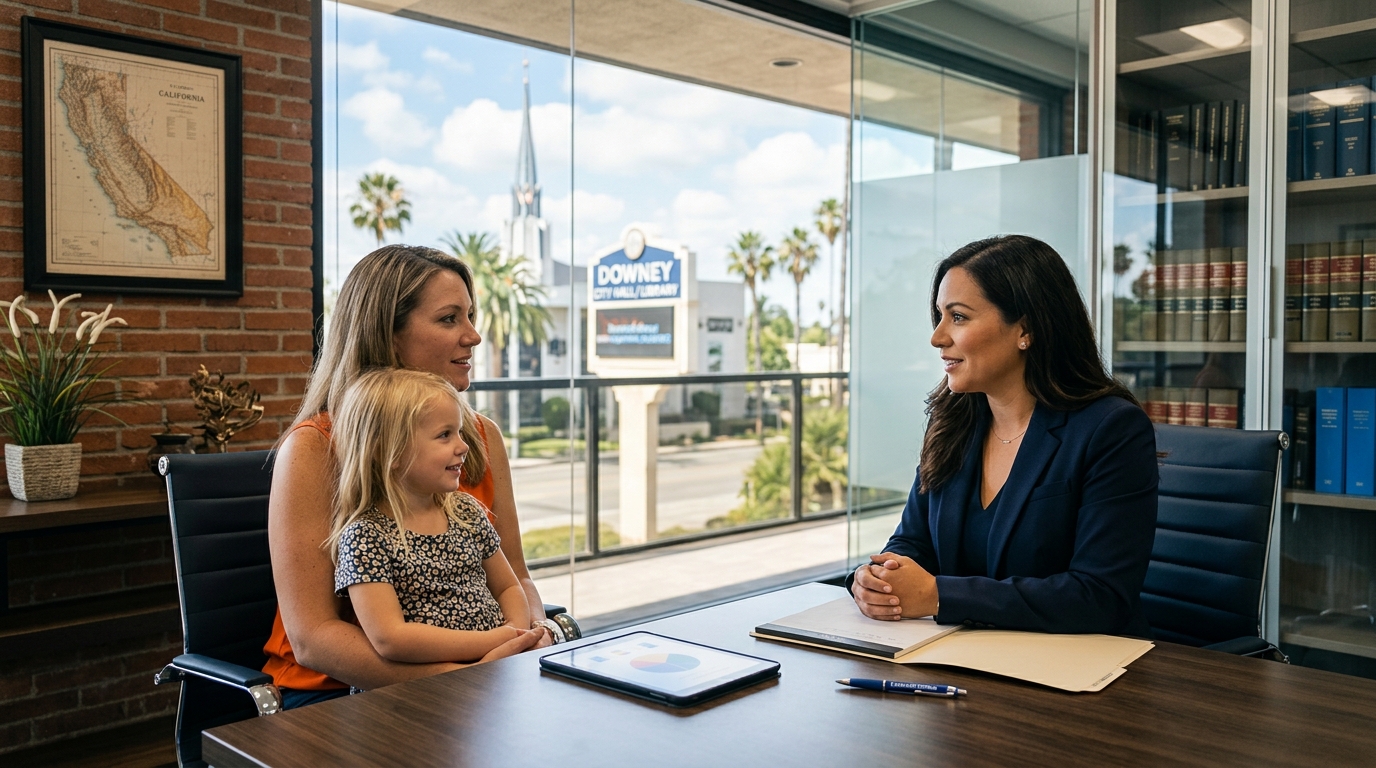

California Child Custody: The Ultimate Guide to Winning Your Case
Standing on the steps of the Downey courthouse, the anxiety is palpable. Your heart races. You are facing a divorce with kids, and nothing matters more than protecting your relationship with them. Navigating the complex world of california child custody often feels like walking through a minefield. You are certainly not alone in this fear. Many local parents share this raw, visceral dread of losing their children.
However, understanding the legal system changes everything. The state does not want to tear families apart. In fact, California law establishes that both parents have an equal right to custody, according to September 2025 guidelines. Securing that right requires strategy, preparation, and fierce advocacy. If you want to protect your family, you need a clear roadmap. Therefore, we have compiled the essential strategies you need. Here are seven actionable secrets to help you win joint custody and secure your child’s future.
Table of Contents (Click to expand)
- The High Stakes of a California Custody Battle
- Understanding California Custody Types
- 7 Secrets to Win Joint Custody in California
- The Reality of California Custody Statistics
- Common Joint Custody Visitation Schedules
- Visualizing the ‘Best Interest’ Standard
- Protect Your Family Today
- Frequently Asked Questions About California Child Custody
The High Stakes of a California Custody Battle
When you are in the middle of a dispute, securing a favorable california child custody arrangement is your top priority. The legal process can be overwhelming, but being prepared is your best defense. By learning how the local courts operate, you can approach your case with confidence and peace of mind.
Understanding California Custody Types
Before stepping into a family court, you must understand the rules of the game. According to a 2026 legal analysis, there are two main forms of california child custody: legal custody and physical custody. These distinctions dictate how you will raise your child after a split.
First, legal custody refers to the authority to make major life decisions for your child. This includes choices about education, healthcare, and religious upbringing. Most courts prefer to award joint legal custody. Consequently, both parents usually retain an equal say in these crucial areas.
Physical custody, on the other hand, determines where the child actually lives. Joint physical custody means the child spends significant time residing with both parents. Conversely, sole physical custody means the child lives primarily with one parent, while the other receives visitation rights.
Judges in California evaluate several factors to ensure they do not disrupt a child’s life excessively. Specifically, they look closely at a parent’s income, residence, and established relationship with the child. Ultimately, the goal is stability. Understanding these definitions is the absolute foundation of any successful custody agreement.

7 Secrets to Win Joint Custody in California
Winning a california child custody case is not about fighting the hardest. Instead, it is about preparing the smartest. Here are seven secrets to secure your parental rights.
- 1. Focus on the Best Interest of the Child. All california child custody decisions must prioritize the best interest of the child. Consequently, every argument you make in court must highlight exactly how your involvement benefits your kids.
- 2. Prepare Thoroughly for Custody Mediation. In California, mediation is mandatory if parents cannot agree on a parenting plan. Treat this meeting incredibly seriously. You can read more about navigating this critical process in our California Custody Mediation: A Parent’s Guide. A successful mediation often prevents a brutal court battle.
- 3. Maintain a Stable Environment. Courts despise disruption. Therefore, you must demonstrate a safe, consistent home life. Keep your residence clean, maintain a steady income, and ensure your child has a dedicated space in your home.

- 4. Document Everything. Memory is notoriously unreliable in family court. Keep a detailed journal of your parenting time. Track expenses, save text messages, and log missed visits by your ex-spouse. Ultimately, hard evidence always beats hearsay.
- 5. Be Willing to Co-Parent. Judges look favorably upon parents who actively encourage a relationship with the other spouse. Never badmouth your ex in front of the kids. Show the court you can communicate effectively and put your grievances aside.
- 6. Assert Your Father’s Rights Early. A father’s rights in a California divorce vary dynamically depending on the unique family situation. Do not assume the mother automatically gets primary custody. Assert your rights immediately. For specific strategies, review our California Father’s Rights: Family Law Guide.
- 7. Hire an Aggressive, Local Attorney. Family law is highly localized. A lawyer who knows the Downey courthouse judges will give you a massive advantage. You need an advocate who is compassionate with you but fierce in the courtroom.
The Reality of California Custody Statistics
Understanding the statistical landscape can ease your anxiety. As of 2026, data shows a strong judicial preference for shared parenting in california child custody cases. In fact, roughly 85% of California custody cases settle out of court through mediation or mutual agreement. This clearly highlights the importance of strategic negotiation.
Furthermore, a 2025 demographic study revealed that joint physical custody awards have increased by 12% over the last decade. Courts are actively moving away from the outdated model of granting sole custody to one parent. They recognize that children thrive when both parents remain actively involved. By presenting a well-documented case, you significantly increase your odds of falling into this positive statistical majority.
Common Joint Custody Visitation Schedules
Crafting a workable schedule is a critical part of your custody agreement. Below is a breakdown of the most common joint physical custody arrangements approved by courts handling california child custody in 2026.
- 2-2-3 Schedule: Parents alternate 2 days, then 2 days, then a 3-day weekend. This is best for younger children needing frequent contact with both parents.
- Week-On / Week-Off: Children spend exactly one week with each parent interchangeably. This is best for older children and teenagers who prefer fewer transitions.
- 3-4-4-3 Schedule: Parent A has 3 days, Parent B has 4 days, then they swap the next week. This is best for parents with predictable, set work schedules.

Visualizing the ‘Best Interest’ Standard
To truly grasp how judges make decisions, imagine a wheel infographic titled “The Best Interest of the Child.” At the center of the wheel is the child’s well-being. Radiating outward are several colored spokes representing the core legal factors.
One spoke highlights “Health, Safety, and Welfare.” Another spoke illustrates the “Nature of Emotional Ties” with each parent. A third spoke depicts “History of Domestic Violence or Substance Abuse.” Finally, the last spoke shows “Ties to School and Community.” This visual concept perfectly encapsulates how a Downey family court judge balances multiple variables to resolve your california child custody dispute and protect your child’s future.
Protect Your Family Today
Facing a custody battle is undeniably terrifying. Standing outside the Downey courthouse steps can make you feel powerless. However, you now possess the seven secrets to take back your power and navigate california child custody successfully. By understanding legal and physical custody, prioritizing your child’s best interests, and preparing meticulously, you can win joint custody.
California family law is complex, but you do not have to navigate it alone. You deserve an advocate who understands your fears and will fight aggressively for your parental rights. Do not leave your child’s future to chance or a bad negotiation.
If you are facing a divorce with kids, take action immediately. Contact our experienced legal team today to build a winning strategy. We will stand by your side, protect your rights, and help you secure the custody agreement your family deserves.
Need help navigating through rough times?
Contact us today to schedule a consultation.
Frequently Asked Questions About California Child Custody
Does a mother automatically get custody in California?
No. California law strictly prohibits gender bias in custody decisions. As of 2026, fathers and mothers have equal rights under the law. Judges base their decisions entirely on the best interest of the child, not the gender of the parent.
What happens if my ex refuses to follow the custody agreement?
If a parent violates a court-ordered custody agreement, you can file a contempt of court motion. Keep detailed records of all missed visitations. The court can enforce the order, modify the custody arrangement, or even impose fines and jail time for severe violations.
Can a child choose which parent to live with in California?
A child cannot make the final legal decision. However, California law requires courts to consider the preference of a child if they are at least 14 years old and mature enough to express a reasoned opinion. The judge still retains the final authority based on the child’s overall best interest.
Do I have to pay child support if we have 50/50 joint custody?
Yes, it is possible. Child support in California is calculated using a formula that considers both parents’ incomes and the exact timeshare percentage. If one parent earns significantly more money, they may still owe child support even with a 50/50 physical custody schedule.