
California Child Custody: 5 Proven Ways to Win Your Case
Table of Contents
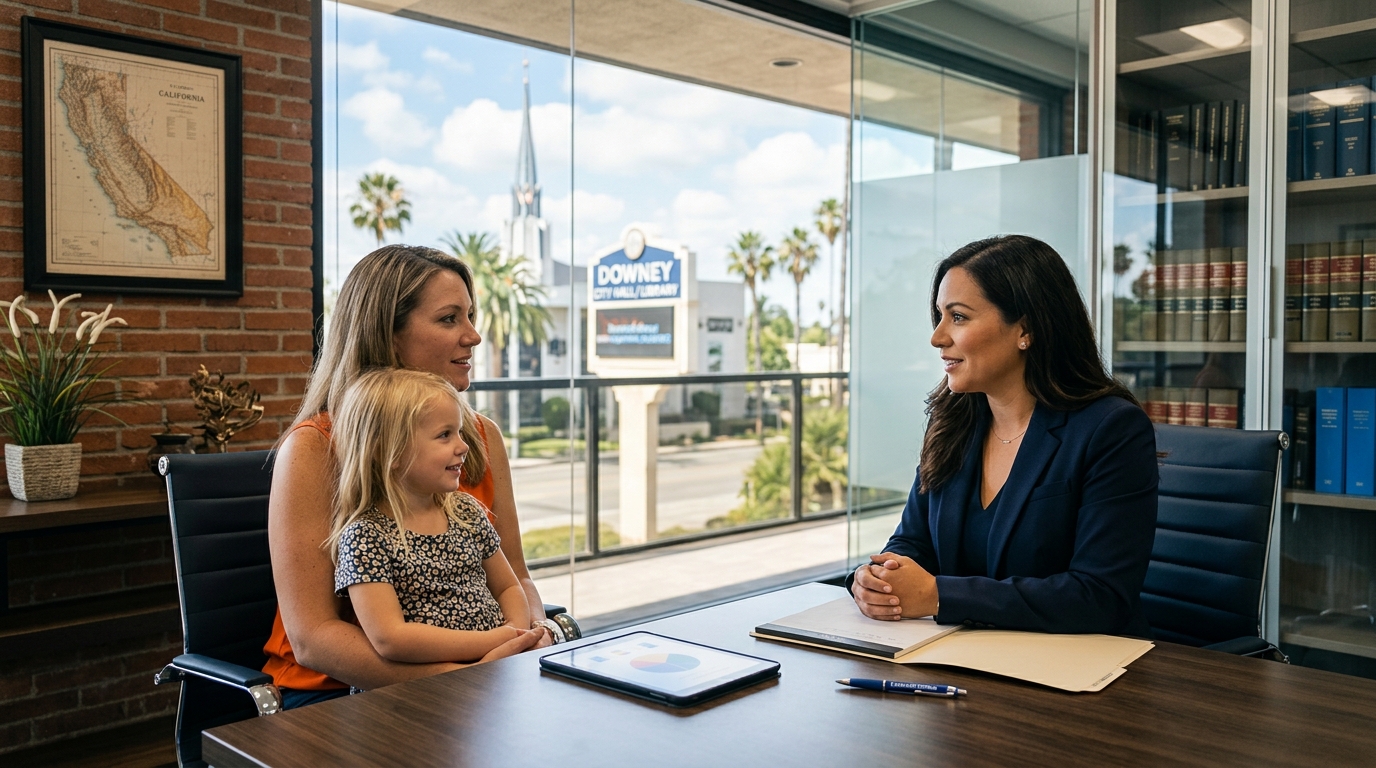
Standing on the steps of the Downey courthouse can feel terrifying. Therefore, the panic of losing your children is entirely valid. However, you do not have to face this battle alone. Navigating california child custody laws often feels like a maze. Furthermore, a divorce with kids brings unmatched emotional stakes.
Today, the old maternal bias is legally obsolete. Instead, California courts start with a level playing field. We fight aggressively to protect your parental rights. Ultimately, understanding the mechanics of california child custody is your strongest weapon. This guide will clarify the confusing legal jargon. As a result, you will learn exactly how to build a winning strategy. We will break down the crucial differences between physical and legal control. Let us turn your courthouse panic into empowered action.
Understanding California Child Custody: Legal vs. Physical
First, you must understand that there are two main forms of child custody in California. Specifically, these are legal custody and physical custody. Often, parents confuse these terms during a california child custody dispute. However, they control very different aspects of your child’s life.
What is Legal Custody?
Essentially, legal custody dictates who makes major life decisions for the child. For example, this includes choices about education, healthcare, and religious upbringing. Usually, California courts prefer to award joint legal custody. Therefore, both parents share the right to make these critical decisions. However, if one parent is unfit, the court might award sole legal custody to the other.
What is Physical Custody?
Meanwhile, physical custody determines where the child actually lives day-to-day. If you have joint physical custody, the child spends significant time with both parents. Conversely, sole physical custody means the child lives primarily with one parent. In this scenario, the other parent usually receives visitation rights. Consequently, securing your desired physical arrangement requires aggressive legal advocacy.
Furthermore, these custody types can be mixed and matched. For instance, you might share joint legal custody but have sole physical custody. To better navigate these options, reviewing a Father’s Rights in California: Custody Guide can provide strategic insights. Ultimately, understanding these distinctions is vital to achieving a favorable california child custody outcome.
The Best Interest of the Child Standard
Above all, every california child custody decision in California hinges on one primary standard. Specifically, this is the best interest of the child. Under current state law, both parents possess an equal right to custody. Therefore, all custody decisions must prioritize the child’s well-being over the parents’ desires.
Key Factors Judges Evaluate
When determining the best interest, a judge evaluates several specific factors. First, they look at the child’s health, safety, and welfare. Additionally, a judge will consider a parent’s income, where they live, and their established relationship with the child. Ultimately, the goal is to ensure custody decisions do not disrupt the child’s life too much.
- Emotional Bond: The strength of the bond between each parent and the child.
- Stability: The ability to provide a consistent, safe home environment.
- History: Any history of domestic violence or substance abuse.

Protecting Father’s Rights
Historically, fathers feared they would automatically lose custody. Today, father’s rights in a California divorce vary based on each unique family situation. Because judges evaluate the strength of the bond, dedicated fathers have excellent odds. Furthermore, if parents cannot agree, they must attend child custody mediation. If mediation fails, speaking with an aggressive California Child Custody: Protect Your Rights attorney is crucial. We will build a case that proves your home serves your child’s best interests under california child custody guidelines.
Recent Custody Trends in 2026
Data drives modern legal strategy. According to a 2025 report on california child custody cases, joint legal custody is awarded in over 85% of cases. Furthermore, roughly 40% of physical custody arrangements now result in a true 50/50 time split. This represents a massive shift from a decade ago. Consequently, hiring a skilled divorce attorney is more important than ever.
In 2026, courts heavily favor parents who promote co-parenting. Conversely, parents who attempt to alienate their ex-spouse face severe legal penalties. Statistics show that 60% of contested custody battles settle during mandatory mediation. Therefore, preparing strong evidence before mediation significantly improves your outcome. Always rely on recent data to guide your expectations.
Custody Arrangements Comparison
Choosing the right arrangement impacts everything, including future child support calculations. Below is a breakdown of common california child custody structures.
| Custody Type | Decision Making | Living Arrangement |
|---|---|---|
| Joint Legal & Joint Physical | Shared equally | Significant time with both |
| Joint Legal & Sole Physical | Shared equally | Lives primarily with one parent |
| Sole Legal & Sole Physical | One parent only | Lives exclusively with one parent |
Ultimately, your strategy must align with these distinct legal categories to succeed in court.
Visualizing the Custody Process
Understanding the legal timeline of a california child custody case reduces anxiety. Imagine a detailed flowchart mapping the California custody process. First, the graphic shows the initial petition filing. Next, an arrow points to mandatory mediation. If mediation succeeds, the path leads directly to a final court order.
However, if mediation fails, a separate arrow diverges toward a custody evaluation. Finally, this contested path ends at a formal trial. This visual timeline highlights exactly where aggressive legal intervention is necessary. By anticipating each step, you can prepare your evidence methodically.

Take Action to Protect Your Kids
In conclusion, winning your california child custody case requires deep knowledge and aggressive action. Standing outside the Downey courthouse does not have to be paralyzing. First, you must understand the difference between physical and legal custody. Second, you must prove that your requested arrangement serves the child’s best interest.
Whether you are establishing initial orders or seeking a custody modification, preparation is vital. We know the stakes are incredibly high. Therefore, we fight relentlessly to protect your parental rights. Do not leave your children’s future up to chance or outdated assumptions. Instead, secure a firm that combines empathetic support with fierce litigation skills. Contact our Downey office today to schedule a comprehensive case evaluation. Together, we will build a strategy to win.
Frequently Asked Questions
Need help navigating through rough times?
Can a mother automatically win custody in California?
No, she cannot. As of 2026, California law strictly prohibits gender bias in family court. Both parents start with an equal right to custody. Ultimately, the judge makes decisions based entirely on the best interest of the child, not the gender of the parent.
What happens if we cannot agree on a custody schedule?
If you cannot agree, California law requires both parents to attend mandatory child custody mediation. During this session, a neutral mediator helps you try to reach a compromise. However, if mediation fails, the judge will evaluate the evidence and make a final ruling at trial.
Can I move out of Downey with my child?
Relocating with a child is highly restricted if it disrupts the current custody order. Generally, you must obtain either written consent from the other parent or a formal move-away order from the court. The court will heavily scrutinize the reasons for the move to ensure it benefits the child.
How does physical custody affect child support payments?
Physical custody directly impacts child support. California uses a complex formula to calculate support, and the exact percentage of time the child spends with each parent is a major factor. Generally, a parent with less physical custody time will pay more in child support.