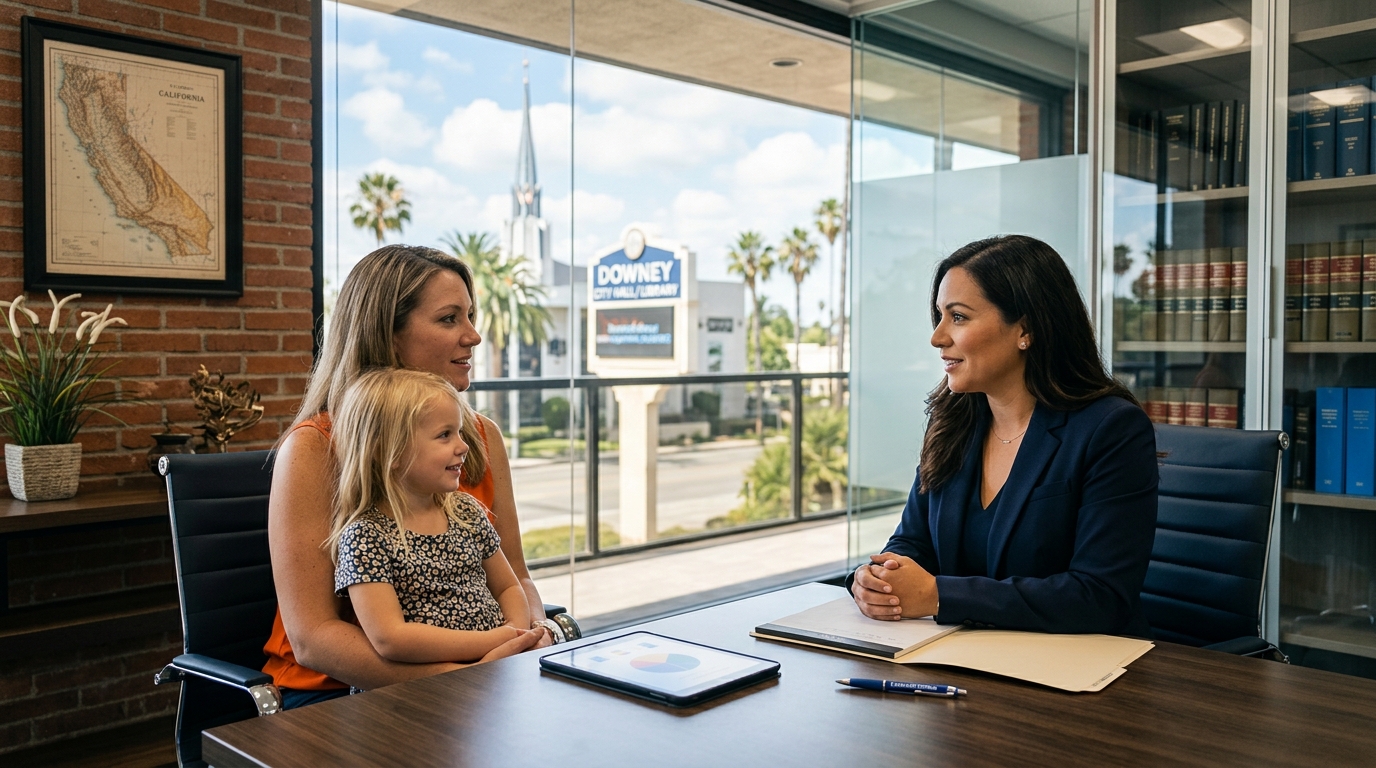

Protect Your Kids: California Child Custody Guide
Navigating the Fear of Family Court
I remember the sheer terror parents feel standing outside the Downey courthouse. Your heart pounds heavily. Your palms sweat uncontrollably. The fear of losing your children is visceral and paralyzing. Navigating California family law during a bitter divorce feels like walking through a minefield blindfolded. However, you do not have to face this nightmare alone.
As of 2026, California law establishes that both parents have an equal right to custody. We understand this raw anxiety. Therefore, we fight aggressively to protect your family. This comprehensive child custody guide will break down the complex legal statutes into clear, actionable steps. We will empower you with the knowledge you need to secure your children’s future. Keep reading to learn exactly how to protect your kids and win your case in family court.
Understanding Legal vs. Physical Custody
When you step into a Downey courtroom, you must understand the terminology. According to a 2026 guide by J. Carroll Law, there are two main forms of child custody in California. Specifically, these are legal custody and physical custody. Knowing the difference is your first line of defense.
What is Legal Custody?
First, legal custody refers to the right to make major life decisions for your child. For example, this includes choices about education, healthcare, and religious upbringing. Usually, California courts prefer to award joint legal custody. This means both parents share these crucial decisions. However, sole legal custody is sometimes necessary. If one parent is unfit or abusive, we will aggressively pursue sole legal custody to protect your child.
What is Physical Custody?
Next, physical custody determines where the child actually lives. Joint physical custody means the child spends significant time with both parents. Conversely, sole physical custody means the child resides primarily with one parent. The other parent usually receives visitation rights. To learn more about securing your position, read our guide on California Child Custody: Protect Your Rights.
Furthermore, courts rarely award a perfect 50/50 time split. Instead, they look at practical schedules. Therefore, your legal strategy must focus on showing why your proposed living arrangement benefits your child. We build relentless cases to ensure your physical custody rights are respected.
The “Best Interest of the Child” Standard
Ultimately, every custody decision hinges on one critical standard. All custody decisions must prioritize the best interest of the child. This rule was recently reaffirmed by DivorceNet in September 2025. The court does not care about parental egos. Instead, the judge only cares about the child’s safety and well-being.
A judge in California will consider several specific factors. According to J. Carroll Law in 2026, these include:
- Each parent’s current income and financial stability.
- Where each parent lives and the safety of the home environment.
- The existing emotional bond and relationship with the child.
The goal is to ensure custody decisions do not disrupt the child’s life excessively. Moreover, while young children generally cannot voice preferences in court, judges heavily evaluate the child’s existing bonds. They actively avoid breaking established healthy relationships.

Protecting Father’s Rights
Historically, many men feared the system was biased against them. However, a father’s rights in a California divorce are not fixed. Instead, they will vary depending on each family’s unique situation (J. Carroll Law, 2026). We fiercely advocate for fathers to ensure they receive equal consideration under the law.
The Power of Child Custody Mediation
Going to trial is stressful and expensive. Therefore, resolving custody disagreements outside of court through child custody mediation is highly recommended. In fact, California practice requires mediation if parents cannot agree. During this process, a neutral mediator helps parents draft a parenting plan. To prepare effectively, review our detailed California Custody Mediation: A Parent’s Guide. Mediation gives you control over your destiny, rather than leaving it to a judge.
The 2026 Landscape of Custody and Support
To win your case, you must understand the current legal landscape. As of 2026, data shows that joint legal custody is awarded in over 80% of California family court cases. However, equal physical custody is less common. Only about 40% of families achieve a strict 50/50 physical time-sharing arrangement.
Additionally, physical custody directly impacts child support calculations. The California guideline calculator heavily weighs the exact percentage of time each parent spends with the child. According to a 2025 state report, parents with primary physical custody receive child support in 90% of cases. Therefore, fighting for your rightful parenting time also protects your financial stability. We use hard data and aggressive litigation tactics to secure fair outcomes for both custody and support.
Common Custody Schedule Examples
Crafting effective custody agreements requires creativity and flexibility. Courts favor schedules that provide stability. Below is a table detailing the most common physical custody schedules used in Downey courts in 2026.
| Schedule Type | Time Split | Best Suited For |
|---|---|---|
| 2-2-3 Schedule | 50/50 | Young children needing frequent contact with both parents. |
| Alternating Weeks | 50/50 | Older children and teenagers who prefer fewer transitions. |
| Every Other Weekend | 80/20 | Cases where parents live far apart or one works weekends. |
| Step-Up Plan | Gradual | Reintegrating an absent parent into a child’s daily life. |
Ultimately, the right schedule depends entirely on your family’s daily routine and the child’s specific needs.
Visualizing the Custody Process Timeline
Understanding the legal timeline reduces courtroom anxiety. Imagine a clear, step-by-step infographic mapping your journey through the family court system. First, the visual starts with filing the initial custody petition. Next, an arrow points to the mandatory mediation phase. If mediation fails, the timeline branches out to the discovery and evaluation phase. Finally, the graphic culminates at the formal custody trial.

This infographic uses bold, contrasting colors to highlight critical deadlines. By visualizing these steps, parents in Downey can mentally prepare for the battle ahead. Knowledge is power, and seeing the path forward eliminates the fear of the unknown.
Protect Your Family’s Future Today
Standing outside the Downey courthouse is terrifying, but you do not have to fight alone. In summary, understanding the difference between legal and physical custody is vital. Furthermore, you must always align your strategy with the best interest of the child. Whether you are navigating mediation or fighting for your father’s rights, preparation is your greatest weapon. Do not let the complex family court system intimidate you.
We are fiercely committed to protecting your parental rights. If you are ready to secure your children’s future, read our comprehensive guide to Win Your California Child Custody Case. Contact our Downey office today for a confidential consultation. Let us build an aggressive, data-driven strategy to win your case.
Frequently Asked Questions
Need help navigating through rough times?
At what age can a child choose which parent to live with in California?
In California, there is no magic age where a child has the absolute right to choose. However, as of 2026, the California Family Code states that if a child is 14 years or older, the court must consider their preference. The judge will evaluate if the child is mature enough to make a reasoned choice. Still, the final decision always rests on the child’s best interest.
Can a mother legally keep her child away from the father in California?
No, a mother cannot legally withhold a child from the father unless there is a specific court order allowing it. Both parents have equal rights to the child. If a mother denies court-ordered visitation rights, she can be held in contempt of court. If you face this issue, you must file an enforcement action immediately to protect your rights.
How does child support work with 50/50 custody?
Even with a perfect 50/50 physical custody split, child support may still be ordered. The California guideline calculator considers both the timeshare and the parents’ incomes. If one parent earns significantly more than the other, the higher-earning parent will likely pay child support. This ensures the child enjoys a similar standard of living in both households.
What happens if we cannot agree during child custody mediation?
If you and your ex-spouse cannot reach an agreement during mandatory mediation, the mediator will report this to the court. In some California counties, the mediator may make a recommendation to the judge. Ultimately, the judge will review the evidence, hear testimonies, and make a final ruling based solely on the child’s best interest.