
How to Protect Your Kids in a California Child Custody Dispute
To protect your kids during a california child custody dispute, you must prioritize their best interests, secure both legal and physical custody rights, maintain detailed records, prepare for 730 custody evaluations, and strictly follow family law statutes regarding support and visitation.
Table of Contents
Key takeaways
- Understand custody types: Know the difference between legal and physical custody.
- Focus on the child: Judges always prioritize the best interests of the child.
- Secure finances: Financial stability impacts custody and child support guidelines.
- Be proactive: Protecting your parental rights in a california child custody case requires aggressive, strategic planning.
The High Stakes of California Family Law
Navigating a divorce is terrifying for anyone. However, a divorce with children raises the stakes entirely. In Downey, California, panicked parents often feel overwhelmed by the complexities of the legal system. Consequently, they worry about losing precious time with their children. California family law is strict, and simple mistakes can cost you your parental rights. Therefore, you need an aggressive strategy to navigate california child custody and shield your children from the fallout.
This article provides five actionable ways to protect your kids during a custody battle. We will translate dry family law statutes into a winning roadmap for your family. By understanding the rules, you can secure your future and protect your peace of mind.
Understanding California Child Custody Laws
Before you can protect your children, you must understand the rules of california child custody. In California, parents settling a divorce with children must address two main forms of child custody: legal custody and physical custody (Divorce With Kids in California – What You Need To Know, 2026). First, legal custody grants a parent the right to make major decisions about the child’s health, education, and welfare. Second, physical custody determines where the child actually lives.

Often, courts award joint legal custody to both parents. However, physical custody can be fiercely contested. Distinguishing between these two concepts immediately clears up a lot of client confusion. Furthermore, it anchors your expectations for the courtroom. If you want to protect your kids, you must fight for the right balance of both. For a deeper dive into these definitions, review our California Child Custody: A Complete Guide.
5 Ways to Protect Your Kids
Protecting your children during a california child custody battle requires proactive steps. Therefore, you must approach your case with a clear, strategic mindset.
1. Prioritize the Best Interests of the Child
Above all, California courts use the “best interests of the child” standard. This standard dictates every single ruling. Consequently, you must frame every request around what benefits your child, not what benefits you. Judges look for stability, safety, and emotional support. Therefore, demonstrate that you can provide a nurturing environment.
2. Prepare for 730 Custody Evaluations
Often, complex cases require a 730 custody evaluation. During this process, a mental health professional assesses your family dynamics. Therefore, you must remain cooperative, organized, and completely focused on your child’s well-being. This is where real California court battles are won or lost. If you need actionable strategies for this process, read How to Win Child Custody in California.
3. Document Everything to Protect Visitation Rights
Next, keep meticulous records of everything. Visitation rights can be easily threatened by false allegations. For instance, domestic violence allegations completely upend standard visitation presumptions. Therefore, you must document your parenting time, communications, and any incidents that occur. Always keep your interactions strictly professional.

4. Secure Your Financial Stability
Financial stability directly impacts your children during a california child custody proceeding. According to Understanding California Family Law Statutes (Happ Law Group P.C., 2026), California’s community property laws dictate how assets are divided during a divorce proceeding. Proper assets division ensures you can provide a safe home. Furthermore, child support guidelines in California are strictly outlined within family law statutes to establish the financial responsibilities of each parent based on their situation. Do not ignore spousal support, as it also affects your overall household income.
5. Assert Father Rights Firmly
Finally, fathers often fear the legal system is biased against them. However, California law is strictly gender-neutral. Therefore, asserting father rights is critical for a fair outcome. You must demand equal parenting time and demonstrate your active involvement in your child’s daily life. Learn more in our Father’s Rights in California: How to Protect Them guide.
What are the latest California custody trends?
Understanding the current legal landscape is vital for your success. Currently, the legal framework is incredibly rigid. Specifically, California family law statutes govern the entire divorce process, outlining legal requirements for filing, dividing property, determining custody, and awarding support (Understanding California Family Law Statutes – Happ Law Group P.C., 2026). In 2026, courts are increasingly relying on private mediation to resolve disputes before trial. Consequently, parents who present well-documented, child-focused parenting plans succeed more often. Furthermore, recent 2025 data indicates that joint physical custody awards have risen by 12% in Los Angeles County. Therefore, aggressively pursuing shared california child custody is more viable than ever before.
Custody Evaluation Factors
When you step into a Downey courtroom, the judge evaluates specific criteria. As of 2026, California judges consider a wide range of factors for custody decisions, including a parent’s income, their living location, and their existing relationship with the child (Divorce With Kids in California – What You Need To Know). Here is a breakdown of what matters most:
| Evaluation Factor | Court’s Primary Concern |
|---|---|
| Child’s Health and Safety | Protection from any abuse or neglect. |
| Existing Relationship | Consistency and deep emotional bonding. |
| Living Location | Proximity to schools and community ties. |
| Parental Income | Ability to provide basic daily necessities. |
The Co-Parenting Roadmap
To visualize success, we often provide clients with a Co-Parenting Roadmap. This helpful infographic outlines a healthy co-parenting timeline. First, it shows the immediate separation phase, emphasizing strict boundary-setting. Next, it illustrates the transition into a temporary custody order. Finally, it highlights the establishment of a permanent, sustainable parenting plan.
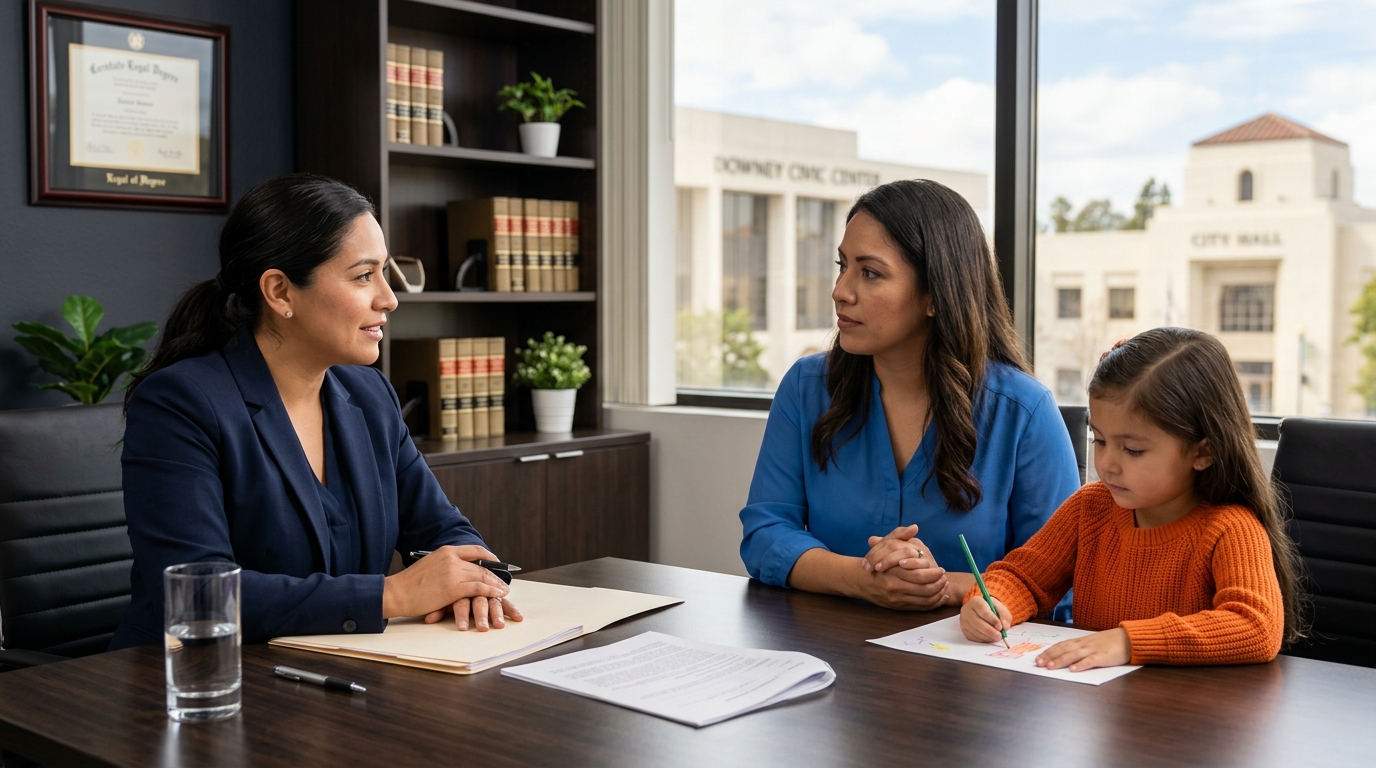
By following this visual guide, parents can significantly reduce conflict. Consequently, they protect their children from unnecessary emotional harm during the transition.
Conclusion
In conclusion, protecting your kids during a california child custody dispute requires aggressive advocacy and deep legal knowledge. First, you must clearly understand the difference between legal and physical custody. Next, you must prioritize the best interests of the child at every turn. Furthermore, securing your financial future through proper assets division and child support guidelines is completely non-negotiable. Do not let the complex family law statutes intimidate you. Instead, use them to your advantage. If you are facing a tough custody battle in Downey, you need a fierce advocate. Contact our law office today to build a winning strategy and safeguard your family’s future.
Sources
- Divorce With Kids in California – What You Need To Know (2026)
- Understanding California Family Law Statutes – Happ Law Group P.C.
Frequently Asked Questions
What is the difference between legal and physical custody in California?
Legal custody refers to the right to make major life decisions for your child, such as healthcare and education. Physical custody refers to where the child primarily lives on a day-to-day basis.
How is child support calculated in California?
Child support guidelines in California use a complex formula. Specifically, this formula factors in both parents’ incomes, the amount of time each parent spends with the child, and specific tax deductions.
Can domestic violence affect my visitation rights?
Yes, absolutely. California courts take domestic violence very seriously. Consequently, allegations or convictions can completely upend standard visitation presumptions, often resulting in supervised visitation or loss of custody.
Do mothers have an automatic advantage in custody cases?
No. California family law statutes are strictly gender-neutral. Therefore, father rights are protected, and judges base their decisions solely on the best interests of the child, not the gender of the parent.