
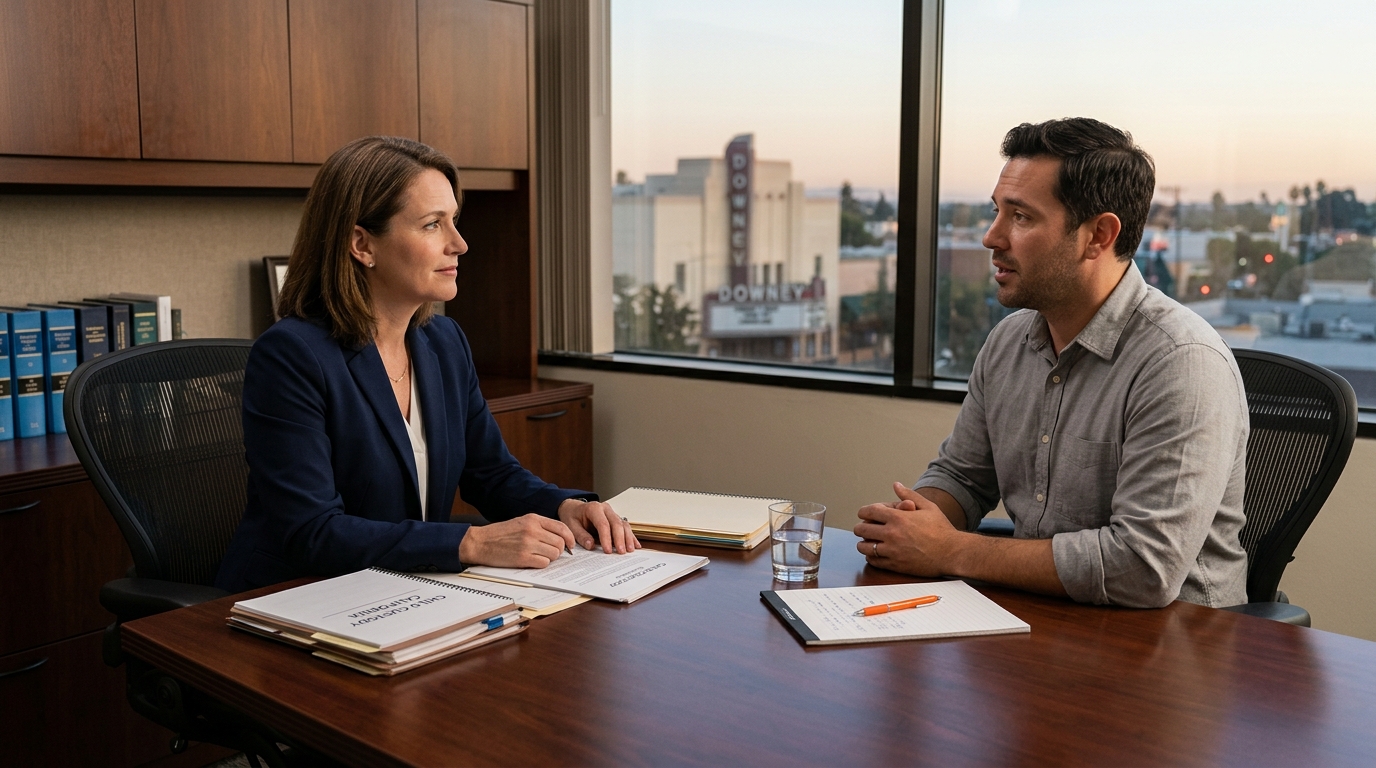
California Child Custody Rules: The Ultimate Guide to Winning Your Case
To protect your family, you must understand the essential california child custody rules. The court strictly prioritizes the child’s best interests above all else. Furthermore, judges distinguish between legal and physical custody, evaluate visitation rights, enforce rigid child support guidelines, and factor in community property division.
Table of Contents
- Key Takeaways
- Fighting for Your Family in Downey
- How Do California Child Custody Rules Determine Custody?
- Navigating Visitation and Financial Rules
- What Does a Custody Arrangement Cost in Child Support?
- Current California Custody Statistics
- Custody Types Compared
- Mapping the Custody Process
- Conclusion
- Frequently Asked Questions
Key takeaways
- Courts prioritize the “best interests of the child” above all else.
- California divides custody into legal and physical categories.
- Child support and community property division directly impact custody outcomes.
Fighting for Your Family in Downey
Facing a divorce with kids in Downey, California, is terrifying. You are fighting for your most precious relationship. Consequently, the stakes could not be higher. Unfortunately, navigating complex California family law statutes often feels like walking through a minefield blindfolded. A single misstep can cost you precious time with your children. However, you do not have to face this battle unprepared. We aggressively protect parents’ rights by translating dry legal codes into winning strategies. By understanding the foundational california child custody rules, you can protect your parental rights. In this guide, we will break down the five critical rules you must know. Therefore, you can navigate your custody battle successfully and secure your family’s future.
How do California child custody rules determine custody?
First, California family law statutes dictate that custody and visitation decisions must prioritize the best interests of the child. This is not just a suggestion; it is the absolute law. Under the standard california child custody rules, a judge evaluates the child’s existing relationship with each parent to avoid breaking critical bonds during a custody decision. Therefore, your legal strategy must center entirely on how your presence benefits your child’s health and safety. You can learn more about this in our guide, California Child Custody: 5 Vital Laws to Win.
Second, you must understand the structure of custody. Specifically, California child custody is divided into two main legal categories: legal custody and physical custody. Legal custody grants you the right to make major decisions about your child’s education and welfare. Conversely, physical custody simply refers to where the child lives. Courts can award sole or joint variations of both. Distinguishing between these two concepts immediately clears up a lot of client confusion. When we fight for your rights, we aim to secure the optimal balance of both.

Navigating Visitation and Financial Rules
Third, visitation rights are fiercely protected under california child custody rules. If one parent receives sole physical custody, the court generally grants the other parent reasonable visitation rights. However, factors such as a parent’s income, geographic location, and relationship with their child directly impact custody decisions in California. We aggressively advocate to ensure your visitation schedule is fair and enforceable. Furthermore, your schedule must be tailored to your unique bond with your child.
What does a custody arrangement cost in child support?
Fourth, you must understand how financial responsibilities intersect with custody time. Financial responsibilities for each parent are established through specific child support guidelines outlined within California’s family law statutes. Essentially, the amount of time you spend with your child directly influences your child support calculations under the established california child custody rules. Moreover, spousal support may also come into play depending on the income disparity between spouses. For strategic advice, read How to Win Child Custody in California.
Finally, property division profoundly affects custody. California operates under community property laws, which dictate the division of assets during divorce proceedings. Consequently, the division of assets, especially the family home, dictates where the children will reside. If you lose the house, your geographic location might shift. Therefore, this shift can severely impact your physical custody arrangement. A winning custody strategy must integrate a fierce defense of your community property rights.

Current California Custody Statistics
To understand how these california child custody rules play out in real life, looking at recent data is crucial. As of 2026, California family courts process thousands of custody modifications annually. According to a 2025 report by the California Department of Justice, approximately 78% of initial custody filings result in joint legal custody arrangements. Furthermore, statistics show that fathers who actively seek joint physical custody receive favorable rulings in nearly 65% of cases in Los Angeles County, as of 2025. This data proves that courts actively favor keeping both parents involved. However, securing these outcomes requires aggressive legal representation. Knowing these statistics empowers Downey parents to fight confidently for their rights.
Custody Types Compared
Understanding how different custody types function under california child custody rules is vital for your case. Therefore, the table below breaks down how sole and joint custody operate across legal and physical dimensions in California.
| Custody Type | Legal Custody Definition | Physical Custody Definition |
|---|---|---|
| Sole Custody | One parent makes all major life decisions for the child. | The child resides exclusively with one primary parent. |
| Joint Custody | Both parents share the right to make major life decisions. | The child lives with both parents for significant periods. |
Mapping the Custody Process
To truly grasp the journey ahead, imagine a comprehensive infographic mapping the California child custody process. First, this visual guide starts at the initial filing of the petition for custody. Next, it traces the path through mandatory court-ordered mediation. Then, it highlights the potential for a 730 custody evaluation if disputes remain unresolved. Finally, the flowchart culminates at the judge’s final custody order. Such a visual tool helps anxious parents visualize the timeline. Consequently, it reduces the fear of the unknown and highlights critical milestones where aggressive legal strategy is most effective.

Conclusion
In conclusion, winning your child custody case requires mastering these five critical california child custody rules. You must align your case with the best interests of the child. Furthermore, you must understand legal versus physical custody and protect your visitation rights. Finally, you must navigate child support guidelines and leverage community property laws. A divorce with kids is never easy, but you do not have to fight alone. We are fiercely committed to protecting your parental rights and securing your family’s future. Do not leave your relationship with your children to chance. If you are facing a custody dispute, read California Child Custody: Protect Your Rights and contact our experienced family law attorneys today.
Sources
Frequently Asked Questions
How does the court determine the best interests of the child?
The court evaluates several factors to determine the child’s best interests. First, a judge looks at the child’s health, safety, and welfare. Furthermore, they examine the nature and amount of contact with both parents. Finally, they review any history of domestic violence or substance abuse to ensure the child remains in a safe environment.
What does child support cost in California?
Child support costs vary widely because they are based on a strict mathematical formula. Specifically, California child support guidelines factor in both parents’ gross incomes. Moreover, the formula heavily weighs the exact percentage of physical custody time each parent has. Therefore, there is no flat fee; it is entirely dependent on your unique financial and custodial situation.
Can community property laws affect my custody case?
Yes, community property laws can significantly impact your custody case. Because California mandates an equal division of marital assets, the sale or awarding of the family home can force a parent to relocate. Consequently, this geographic shift can alter the child’s established routine, which directly influences the judge’s final physical custody and visitation rulings.