

California Child Custody: 5 Proven Ways to Protect Your Rights
Table of Contents
The Emotional Stakes of California Family Law
Standing outside the Downey courthouse, parents facing a california child custody dispute often feel a visceral terror. Your heart races. Your palms sweat. Suddenly, your entire future as a parent rests in the hands of a stranger in a black robe. Facing a divorce with kids is deeply overwhelming. However, you do not have to face this nightmare alone. Navigating California family law requires fierce advocacy and a clear strategy.
As a dedicated divorce attorney, I understand your panic. More importantly, I know how to protect your family. This guide will decode complex legal jargon into actionable steps. Ultimately, we will help you secure the future you and your children deserve. Let us transform your fear into an aggressive commitment to protecting your rights today.
Understanding California Child Custody Types
First, you must understand the rules of the game. According to a 2026 guide by J. Carroll Law, there are two main forms of california child custody: legal custody and physical custody. These two categories dictate your daily life and your child’s future.

Legal custody grants you the power to make crucial life decisions for your child. For example, this includes choices about schooling, medical care, and religious upbringing. Usually, courts prefer to award joint legal custody. Therefore, both parents share these critical responsibilities and must work together.
Conversely, physical custody determines where your child actually lives. If you have sole physical custody, your child resides primarily with you. Alternatively, joint physical custody means your child splits their time between both households. Crafting solid custody agreements requires understanding these distinctions deeply.
If you are fighting for your time, you must know your options. Consequently, to dive deeper into these strategies, read our California Child Custody Guide | Protect Your Kids.
The Best Interest of the Child Standard
When you walk into that Downey courtroom, the judge has one primary focus. Navigating california child custody laws dictates that all decisions must prioritize the best interest of the child. Furthermore, as updated in September 2025 by DivorceNet, both parents have an equal right to custody. The court does not favor mothers over fathers by default.
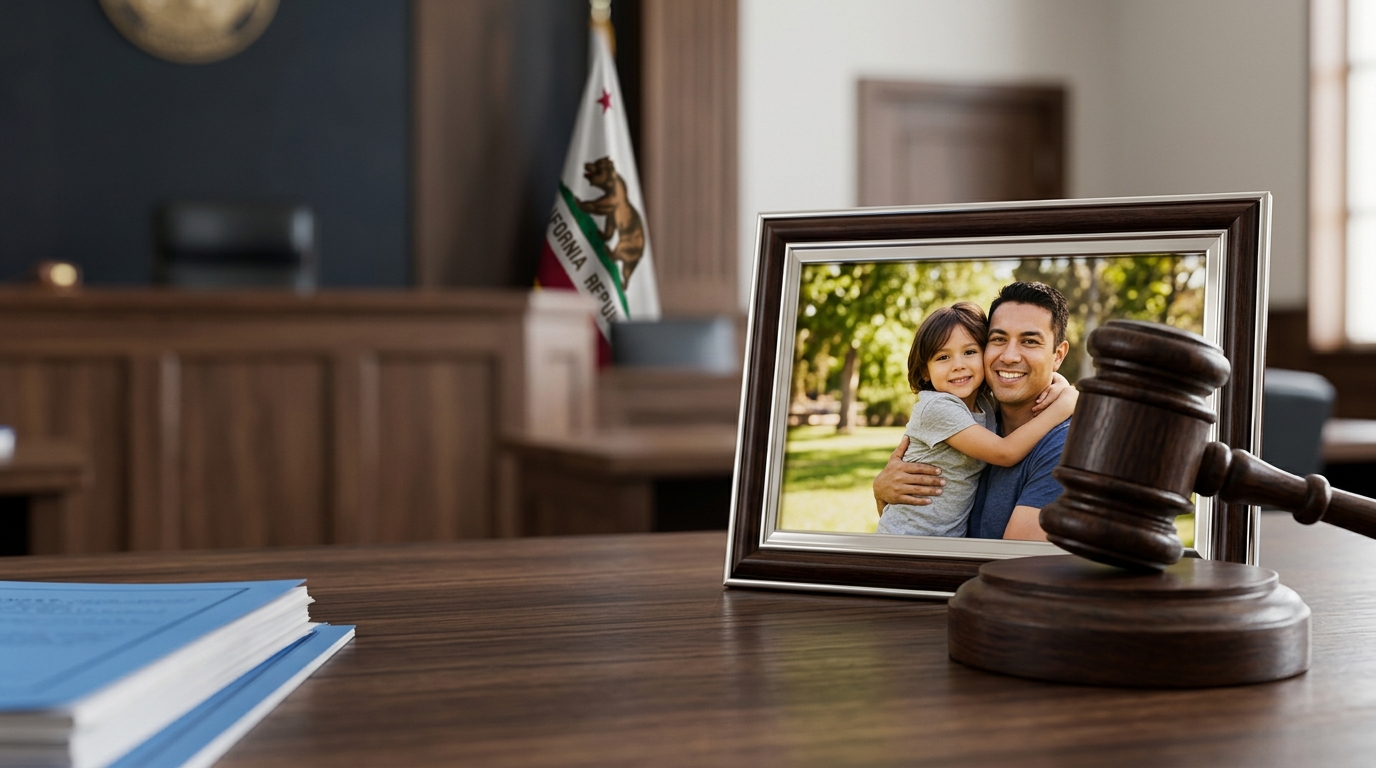
So, how does a judge measure the best interest of the child? They look at specific, concrete factors. According to 2026 insights from J. Carroll Law, a judge considers several elements to avoid disrupting the child’s life too much. These factors include:
- A parent’s income: Financial stability to provide basic needs.
- Living location: Proximity to the child’s current school and community.
- Existing relationship: The established bond between the parent and child.
Additionally, the court evaluates any history of domestic violence or substance abuse. Therefore, securing fair visitation rights depends on proving you provide a stable environment. Furthermore, the specific father’s rights in a California divorce vary based on each family’s unique situation. If you are a dad seeking guidance, explore our Father’s Rights in California: Custody Guide.
Current California Custody Trends
Understanding current trends in california child custody cases helps you prepare for reality. As of 2026, California courts increasingly favor joint physical custody arrangements. Judges want both parents actively involved. Moreover, child support calculations remain strictly formulaic. The state uses a complex calculator based on each parent’s income and their exact percentage of parenting time.
Consequently, accurate time-sharing logs are crucial. Data shows that parents who actively document their involvement secure better outcomes. Furthermore, recent 2025 statistics reveal a rise in alternative dispute resolutions. Parents are moving away from brutal courtroom battles. Instead, they are choosing collaborative methods to save money and protect their children’s mental health.
Comparing Legal vs. Physical Custody
To clarify these concepts, review the table below. It breaks down the critical differences between legal and physical custody in California.
| Custody Type | Legal Definition | Common Examples |
|---|---|---|
| Legal Custody | The right to make major life decisions for the child. | Choosing schools, doctors, and religious practices. |
| Physical Custody | Where the child lives on a day-to-day basis. | Daily routines, sleepovers, and physical care. |
Ultimately, this clear distinction helps you focus your legal strategy effectively before entering the courtroom.
Visualizing the Mediation Process
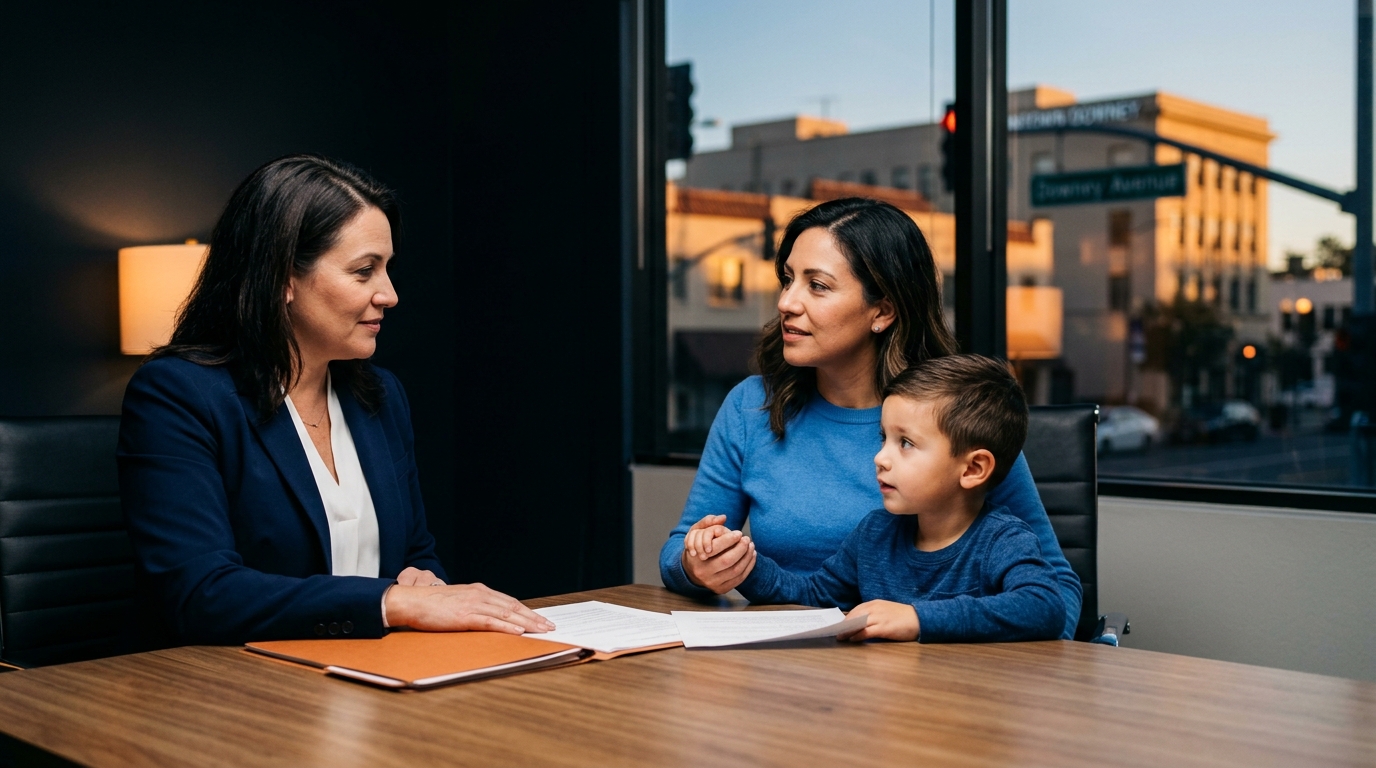
Navigating the court system requires immense preparation. Therefore, we highly recommend visualizing the mediation process. Imagine an infographic titled “The Path to Successful Custody Mediation.” First, it shows the court ordering mandatory mediation. Next, it illustrates the parents meeting with a neutral mediator. Finally, it highlights the creation of a parenting plan.
As DivorceNet noted in September 2025, resolving disagreements through california child custody mediation is strongly recommended. It helps families avoid costly, traumatic court battles. Ultimately, this visual roadmap reminds parents that cooperation often yields the best results.
Conclusion: Take Action to Protect Your Family
Standing on those Downey courthouse steps does not have to be a terrifying experience. By understanding legal and physical custody, you take back your power. Furthermore, by focusing on the best interest of the child, you align your goals with the court’s priorities. Remember, preparation is your greatest asset in family law.
Whether you are navigating mediation or fighting for your father’s rights, you need a fierce advocate. Do not leave your family’s future to chance. Instead, partner with an experienced divorce attorney who will aggressively protect your rights. Contact our Downey office today to schedule a comprehensive case evaluation. Together, we will build a strategy to secure the custody arrangement your child deserves.
Frequently Asked Questions
Need help navigating through rough times?
Do mothers always win custody in California?
No. As of 2025, California law guarantees equal rights to both parents. The court strictly prioritizes the best interest of the child, regardless of a parent’s gender. Therefore, fathers have an equal opportunity to secure joint or sole custody.
What is the difference between legal and physical custody?
Legal custody involves making major life decisions, such as education and healthcare choices. Meanwhile, physical custody determines where the child lives daily and who handles their routine care. Courts often award joint legal custody while dividing physical custody based on the child’s best interests.
Is california child custody mediation mandatory?
Yes. If parents cannot agree on a custody arrangement, California law requires them to attend mediation. According to recent 2025 guidelines, mediation is highly recommended to help parents create a cooperative parenting plan and avoid a stressful court trial.
Can I modify my child custody agreement later?
Yes. If there is a significant change in circumstances, you can petition the court to modify the existing order. For example, a major relocation, a change in income, or a shift in the child’s needs can justify an updated custody agreement.