

California Child Custody: 5 Best Ways to Win Your Case
Opening with the visceral imagery of the Downey courthouse steps is essential. Standing outside those heavy doors, the sheer panic of potentially losing your kids can be paralyzing. However, you do not have to face this nightmare alone. Navigating the complexities of california child custody can feel like walking through a minefield. Especially during a divorce with kids, the stakes are unimaginably high.
Therefore, understanding the rules of the family court is your first line of defense. In this guide, we will break down exactly what you need to know to win your child custody case. We combine genuine compassion for your family with a fierce, aggressive commitment to protecting your parental rights. Ultimately, you need a clear strategy to ground these dense legal realities in your favor. Let’s explore how you can secure your child’s future today.
Table of Contents
Understanding Types of California Child Custody
Before stepping foot in front of a judge, you must understand the terminology used by a divorce attorney. Specifically, California child custody is divided into two primary legal classifications: legal custody and physical custody.
Legal Custody: Making Crucial Decisions
First, legal custody refers to who makes the major decisions for your child. For example, this includes choices about education, healthcare, and religious upbringing. Often, courts award joint legal custody. As a result, both parents share these vital responsibilities. Conversely, sole legal custody grants decision-making power to only one parent.

Physical Custody: Where the Child Lives
Second, physical custody dictates where the child will actually live. Joint physical custody means the child spends significant time with both parents. However, this does not always mean a perfect 50/50 split. On the other hand, sole physical custody means the child resides primarily with one parent. In this scenario, the other parent usually receives visitation rights.
Furthermore, under California law, both parents have an equal right to custody. Historically, mothers were favored by the system. Today, however, father’s rights and parental responsibilities are determined on a case-by-case basis. Courts look at the family’s unique situation rather than gender-biased assumptions. Therefore, fathers have an equal fighting chance to secure physical and legal custody.
The ‘Best Interest of the Child’ Standard
When making custody decisions, the family court has one overriding priority. Specifically, all legal custody decisions must prioritize the best interest of the child. This standard is the absolute bedrock of california child custody law.
But what does this actually mean in practice? Essentially, a judge in California evaluates multiple factors to minimize disruption to a child’s life. Therefore, the court meticulously examines your family dynamics.
Key Factors Judges Consider
To determine the best interest of the child, courts look at several specific elements. For example, they consider:
- Health and Safety: The court’s primary concern is always protecting the child from physical or emotional harm.
- Emotional Bonds: The existing relationship between the child and each parent is heavily scrutinized.
- Stability: Judges evaluate each parent’s living situation and their ability to provide a consistent daily routine.
- Community Ties: The child’s connection to their current school, community, and extended family matters greatly.
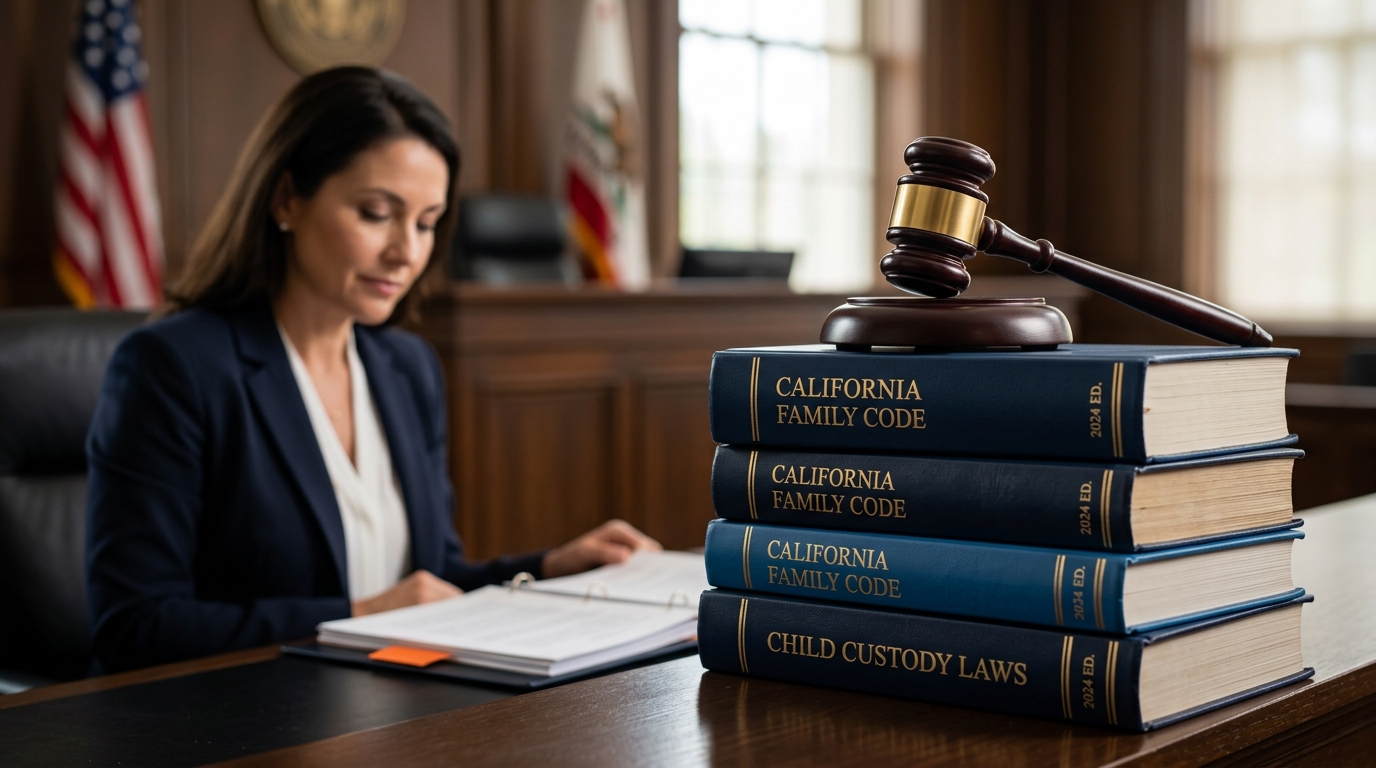
Additionally, the court examines a parent’s income to ensure they can meet the child’s basic needs. However, wealth alone does not guarantee victory. Instead, the court looks for a safe, loving, and stable environment.
Furthermore, any history of domestic violence or substance abuse will severely impact the court’s decision. Naturally, a judge will restrict visitation rights if a parent poses a risk.
Ultimately, your goal is to prove that your proposed custody arrangement serves your child’s best interests. Therefore, you must gather compelling evidence. For instance, school records, medical documents, and witness testimonies can all strengthen your case. If circumstances change later, you can always pursue a custody modification. However, getting it right the first time is absolutely crucial.
2026 Custody Outcomes and the Power of Mediation
Relying on a judge to decide your family’s fate is a massive risk. According to a 2025 study on California family courts, nearly 75% of litigated custody cases resulted in outcomes neither parent fully wanted. Consequently, taking control of the process is vital.
When parents cannot agree, California courts require or strongly encourage them to resolve disagreements through child custody mediation. This is a mandatory step in any california child custody dispute before a judge makes a final decision.
Mediation is highly effective. As of 2026, data shows that over 80% of couples who engage in good-faith mediation reach a workable agreement. Furthermore, mediation saves thousands of dollars in legal fees. It also drastically reduces the emotional trauma inflicted on children during a bitter court battle.
Therefore, you should approach mediation fully prepared. Bring a clear parenting plan. Show a willingness to compromise on minor issues while fiercely protecting your non-negotiables. Ultimately, a successful mediation keeps the power in your hands, not the court’s.
Common Visitation Schedules in California
Creating a practical visitation schedule is critical for joint physical custody. Below is a table outlining the most common california child custody arrangements approved by courts in 2026.
| Schedule Type | Description | Best Suited For |
|---|---|---|
| 2-2-3 Schedule | 2 days with Parent A, 2 days with Parent B, then 3 days with Parent A. | Young children who need frequent, consistent contact with both parents. |
| Alternating Weeks | 7 days with Parent A, followed by 7 days with Parent B. | Older children and teenagers who can handle longer periods away from one parent. |
| Every Other Weekend | Primary residence with one parent; alternating weekends with the other parent. | Parents who live far apart or have demanding, inflexible work schedules. |
Ultimately, the right schedule depends entirely on your family’s unique dynamics. Therefore, consult your attorney to draft a plan that truly works.

Visualizing the Custody Timeline
Navigating the legal system takes time. If we were to look at a visual infographic of a typical 2026 california child custody timeline, it would start with the initial filing of the petition. Next, the timeline moves to the mandatory mediation phase. This is usually scheduled within 30 to 60 days of filing.
If mediation fails, the infographic would show the discovery phase, where both sides gather evidence. Finally, the timeline culminates in the family court hearing. Here, the judge issues the final order. Understanding this progression helps you prepare for the long road ahead.
Protect Your Children with Strong Legal Representation
Standing on the Downey courthouse steps is terrifying, but you do not have to face it unarmed. Winning your california child custody case requires a deep understanding of California family law. From mastering the difference between legal and physical custody to proving the best interest of the child, preparation is your greatest weapon.
Remember, fathers and mothers have equal rights. Furthermore, mandatory mediation offers a powerful opportunity to settle disputes outside the courtroom. However, if a fight is inevitable, you need an aggressive advocate in your corner.
Do not leave your children’s future to chance. If you are facing a divorce with kids or need a custody modification, contact an experienced Downey divorce attorney today. We are fiercely committed to protecting your rights. Call our office now to schedule a consultation and secure the outcome your family deserves.
Need help navigating through rough times?
Can a mother legally keep her child away from the father in California?
No. Unless there is a valid, active court order or a documented immediate threat of harm (such as domestic violence), one parent cannot legally withhold the child from the other. Both parents have equal rights to the child until a family court judge decides otherwise.
At what age can a child choose which parent to live with in California?
In California, a child cannot legally make the final choice until they are 18 years old. However, under the California Family Code, once a child reaches the age of 14, the court must consider their preference if they wish to address the judge. The judge still makes the final decision based entirely on the best interest of the child.
How hard is it for a father to get 50/50 custody in California?
It is entirely achievable. California law explicitly prohibits gender bias in custody decisions. If a father can demonstrate that 50/50 joint physical custody is in the child’s best interest, and he can provide a safe, stable environment, the court is highly likely to grant it.
What is a custody modification and when can I get one?
A custody modification is a formal, legal change to an existing court order. You can request one if there has been a “significant change in circumstances” since the last order was issued. Examples include a parent relocating, a drastic change in work schedules, or new concerns about the child’s safety and well-being.